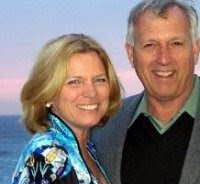
Being a leading edge baby boomer, I can personally relate to many of the challenges and opportunities that are in front of out generation. I have been greatly encouraged by much of the stuff I have read about growing older in this great country. Though the years ahead could very well be the best years and most productive years of our lives, many of us need to deal with a number of realities about how old we are, who we are in terms of our health, personal relationships and friendships, our financial circumstances, and our past experiences.
It has been very eye-opening to me as I have seen the insidious affect that ageism on the baby boomers in our culture. A friend of mine recently told me about a person he knows who at the age of 60 was given his pink slip at work. He was one of three founders of what is now a massive communications company. They wanted him to move on. The man is very successful and is financially set for the rest of his life, but he was really taken back by this experience. He wondered if perhaps the best years of his life were behind him.
If ageism can do that to a man who has seen phenomenal success in his profession and who has more than enough money to comfortably live the rest of his life without receiving another paycheck, what does that say to the rest of us run-of-the-mill baby boomers? I think there are tens of millions of boomers who have pretty much bought into what society is telling them and what they have now come to believe about themselves--"You are on the shelf." "Get used to it." "Get out of the way." "You're not needed around here anymore."
Two of the best books I have read about our generation are The Power Years (A User's Guide for the Rest of Your Life), by Ken Dychtwald and Daniel Kadlec and Encore (Finding Work that Matters in the Second Half of Life), by Marc Freedman. Both of these books make some pretty compelling arguments about the positive impact the Baby Boomer can make on society provided that they manage themselves well and make good choices about how they want to invest their lives in the second half.
Though the potential to transition well into the second half of life is great, many will find it to be a rougher road than others. Marc Freedman writes:
It has been very eye-opening to me as I have seen the insidious affect that ageism on the baby boomers in our culture. A friend of mine recently told me about a person he knows who at the age of 60 was given his pink slip at work. He was one of three founders of what is now a massive communications company. They wanted him to move on. The man is very successful and is financially set for the rest of his life, but he was really taken back by this experience. He wondered if perhaps the best years of his life were behind him.
If ageism can do that to a man who has seen phenomenal success in his profession and who has more than enough money to comfortably live the rest of his life without receiving another paycheck, what does that say to the rest of us run-of-the-mill baby boomers? I think there are tens of millions of boomers who have pretty much bought into what society is telling them and what they have now come to believe about themselves--"You are on the shelf." "Get used to it." "Get out of the way." "You're not needed around here anymore."
Two of the best books I have read about our generation are The Power Years (A User's Guide for the Rest of Your Life), by Ken Dychtwald and Daniel Kadlec and Encore (Finding Work that Matters in the Second Half of Life), by Marc Freedman. Both of these books make some pretty compelling arguments about the positive impact the Baby Boomer can make on society provided that they manage themselves well and make good choices about how they want to invest their lives in the second half.
Though the potential to transition well into the second half of life is great, many will find it to be a rougher road than others. Marc Freedman writes:
Today we face the prospect of tens of millions of boomers moving through their fifties and into their sixties. Some are crossing from military life to civilian roles, much like their predecessors after World War II. For most, it's a divide in the life cycle, a move from well-established terrain to a new phase of life and work that remains poorly defined but will last for decades. If they fail to navigate this transition successfully, if they are left at loose ends, underemployed, lacking purpose, feeling diminished and betrayed, the results could be disastrous for the economy, for society, and for individuals. (Encore p.195)
What kinds of roles might the church play in helping this historic generation of Americans figure out what is going on in their lives at this juncture? Could we do something that would help them make this transition well by plugging them into work that would help expand the kingdom. Could we help them tie up some of these loose ends, offer them opportunities to serve that would fill the purpose vacuum that many are feeling during these years. By doing this for them, we could breathe new life and energy into them so that they would feel better about themselves and more hopeful about the decades that lie ahead of them.
I think the church is up to this challenge. I think it needs to be. How about you?
What kinds of roles might the church play in helping this historic generation of Americans figure out what is going on in their lives at this juncture? Could we do something that would help them make this transition well by plugging them into work that would help expand the kingdom. Could we help them tie up some of these loose ends, offer them opportunities to serve that would fill the purpose vacuum that many are feeling during these years. By doing this for them, we could breathe new life and energy into them so that they would feel better about themselves and more hopeful about the decades that lie ahead of them.
I think the church is up to this challenge. I think it needs to be. How about you?